BLM Land in the U.S.: Free Camping, Length of Stay, and LTVAs


Introduction
If you're planning to spend the winter in the American Southwest — Arizona, Nevada, California, Utah — you'll quickly hear about "BLM land." It's one of the best options for free or nearly-free camping, but the rules aren't always clear for a first stay. Here's what you need to know: what it is, how long you can stay, and the real advantages and disadvantages before heading out.
What is BLM land?
The BLM (Bureau of Land Management) is the U.S. federal agency that manages about 245 million acres of public land, mostly in the Western U.S. (Arizona, Nevada, Utah, California, New Mexico, Colorado, Wyoming, Montana, Idaho, Oregon). Unlike national parks, these lands are far less regulated, and in most cases camping is allowed for free outside of specifically restricted zones (conservation areas, private inholdings, protected nesting sites, etc.).
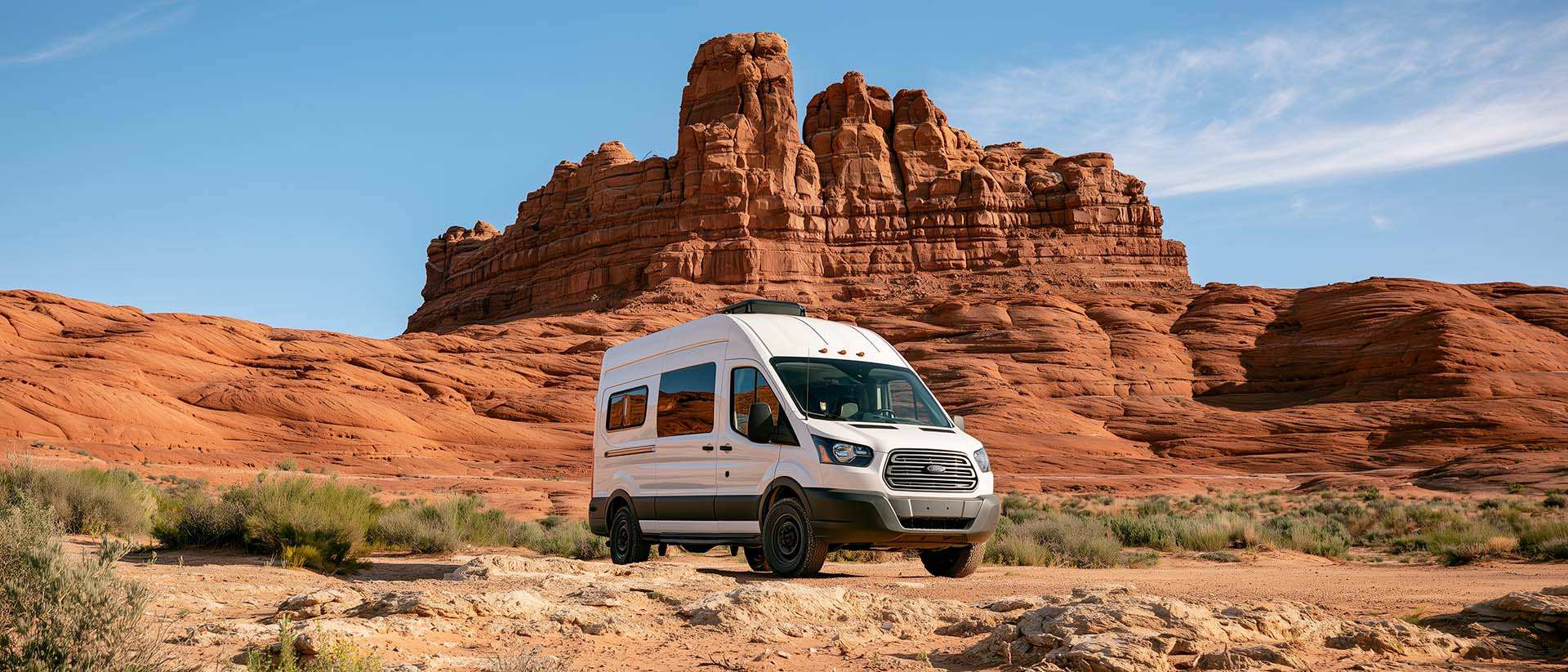
This is usually called "dispersed camping" — setting up directly on public land, with no developed site, no services, and no reservation — as opposed to a developed BLM campground (less common, but they exist, usually with a fee).
How long can you stay on BLM land?
The general rule, applied by most BLM field offices, is a 14-day limit within any 28-day period, within a given radius (often 25 miles, though this varies by field office — check with the local office before settling in for the winter). Once the 14 days are up, you need to move outside that radius before you can camp in the same area again.
This rule exists to prevent campers from permanently settling on public land meant for shared use (recreation, wildlife, grazing, resource extraction). It's often loosely enforced in remote areas, but it is actively enforced in popular spots, particularly around areas favored by winter visitors in Arizona and California.
LTVAs: an option to stay longer
For campers who want to settle in one spot for longer — a common goal for Quebec and Canadian snowbirds — the BLM created LTVAs (Long-Term Visitor Areas), designated zones where you can buy a permit to stay beyond the 14-day limit.
- Season-long permit: typically around $180 USD, valid September 15 to April 15 (the "long-term season").
- Short-term permit: around $40 USD for 14 days, for a shorter stay in an LTVA.
The best-known LTVAs are in the Quartzsite and Yuma area of Arizona — but watch out for a common mix-up: several popular LTVAs associated with "Yuma" (like Imperial Dam or Squaw Lake) are actually across the Colorado River, in California (Imperial County), not Arizona. The name "Yuma" simply comes from the nearest town for groceries and dumping — always confirm the exact state before you go, as local rules and taxes can differ.
Some LTVAs offer basic amenities (a dump station, potable water, sometimes a trash bin) — minimal compared to a private campground, but a real step up from standard dispersed camping with no services at all.
Advantages of BLM camping
- Cost: free for dispersed camping, or very affordable with an LTVA permit compared to a private park for the whole winter.
- Space and quiet: huge open areas, often far less crowded than a developed campground.
- Freedom: no reservations, no fixed schedule — set up wherever it's allowed.
- Scenery: desert, mountains, rock formations — often true wilderness, far from noise.
- Snowbird community: in popular areas (Quartzsite, for example), a large community of RVers gathers every winter, with activities and mutual support.
Disadvantages and precautions
- No services on standard dispersed camping land: no water, sewer, or electricity hookups. You need to be self-sufficient (solar panels, generator, adequate fresh and waste water tank capacity).
- The 14-day limit means moving regularly unless you buy an LTVA permit.
- Access can be rough: dirt or gravel roads, not always suited to every type of vehicle — decent ground clearance is recommended.
- Remoteness: stores, groceries, and medical services can be a significant distance away, especially outside popular hubs like Quartzsite or Yuma.
- Weather: extreme heat is possible late in the season in the desert, and nights can be cold in winter depending on elevation — check conditions before you go.
- Limited cell service in many areas — plan for a backup way to communicate if you're camping somewhere remote.
- Leave No Trace: continued access to these lands depends on campers respecting them — pack out what you bring in, and manage trash and wastewater properly.
In summary
BLM land offers one of the most affordable and freest camping options in the U.S., but it's not a direct substitute for a developed campground: you need to be self-sufficient, respect the 14-day limit (or get an LTVA permit for a full winter in one spot), and check the rules of the specific field office and area you're headed to before you leave. For most snowbirds, a mix of dispersed camping and LTVA stays ends up being the most popular approach.